
Bone Grafting in Riverview, FL
Build a Stronger Foundation With a Dentist in Riverview
Jawbone loss can happen after tooth loss, gum disease, infection, injury, or long-term missing teeth. When there is not enough healthy bone to support a dental implant, bone grafting may be recommended to rebuild the area and create a stronger foundation for future treatment.
At EverySmile Dental Riverview, Dr. Seth H. McDuffie, DMD, PA provides dental bone grafting for patients in Riverview, Lithia, Brandon, Valrico, Fish Hawk, Boyette, Bloomingdale, and nearby communities. If you are searching for Bone Grafting in Riverview, FL, our local dental office on Boyette Road can evaluate your jawbone health and explain whether grafting may be part of your implant treatment plan.
Call (813) 741-0483 to schedule your bone grafting consultation.
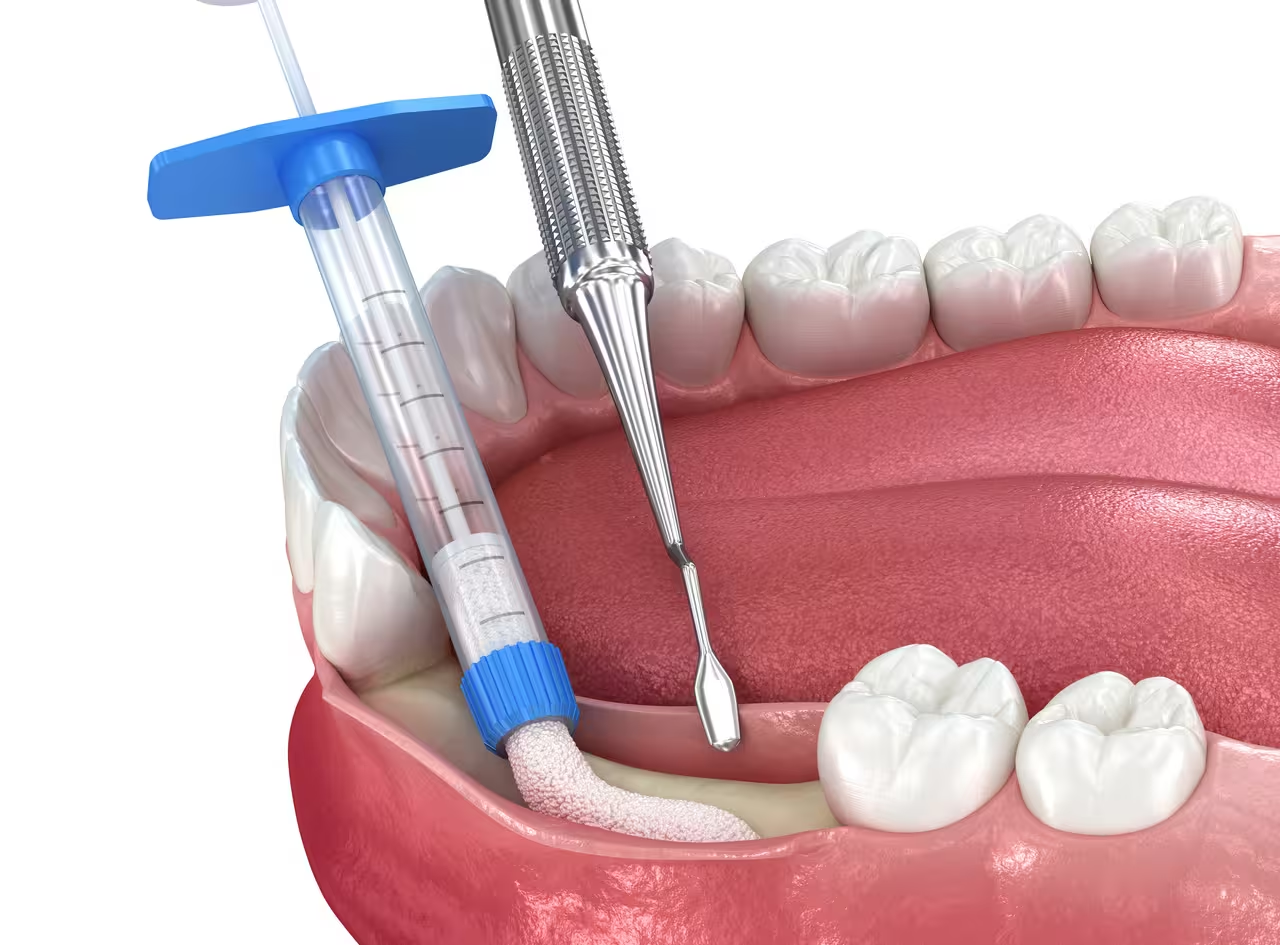
What Is Dental Bone Grafting?
Dental bone grafting is a surgical procedure that adds bone-supporting material to an area of the jaw where bone volume or density has been lost. The goal is to help the body rebuild stronger bone over time.
Bone grafting is often used before dental implants, especially when the jawbone is too thin, too short, or not dense enough to provide stable implant support.
A dental bone graft may use:
- Your own bone
- Donor bone
- Synthetic biocompatible grafting material
- Other approved grafting materials selected for your needs
After the graft is placed, the area needs time to heal. During healing, the graft supports new bone growth and helps prepare the jaw for future restorative care when appropriate.
Why Would You Need a Bone Graft?
Bone grafting may be recommended when the jawbone does not have enough structure to support a dental implant or preserve the shape of the ridge after tooth loss.
You may need a bone graft if:
- A tooth has been missing for an extended period
- Bone has shrunk after tooth loss
- Gum disease has affected bone support
- A dental infection has damaged surrounding bone
- A tooth extraction is planned before implant treatment
- The jawbone is too thin or short for implant placement
- The sinus is close to the upper jaw in the back tooth area
- Injury or trauma has changed the shape of the jawbone
Even if you have been told in the past that you do not have enough bone for implants, a consultation can help determine whether bone grafting may expand your treatment options.
Types of Bone Grafting
The right bone grafting approach depends on your anatomy, the amount of bone loss, the location of the missing tooth, and your long-term treatment goals.
Socket Preservation or Ridge Preservation
Socket preservation, also called ridge preservation, is often performed at the time of a tooth extraction. Grafting material is placed in the empty socket to help reduce bone shrinkage and preserve the shape of the jaw for a future implant or restoration.
When a tooth cannot be saved, Dr. McDuffie may discuss tooth extractions and whether grafting should be completed at the same visit.
Horizontal or Vertical Ridge Augmentation
Ridge augmentation is used when the jawbone is too narrow, too short, or uneven for implant placement. This type of graft helps rebuild the width or height of the bone in the treatment area.
Sinus Lift
A sinus lift may be recommended when there is not enough bone height in the upper back jaw and the sinus cavity is close to the implant site. This procedure gently raises the sinus floor and adds grafting material to create more support for future implant placement.
What to Expect During the Bone Grafting Process
Bone grafting is carefully planned to support safety, comfort, and long-term treatment goals.
Step 1: Consultation and Digital Imaging
Your visit begins with an exam and digital imaging. Dr. Seth H. McDuffie will evaluate your teeth, gums, jawbone, bite, and missing tooth area. Imaging helps determine the amount of available bone and whether grafting may be needed.
Step 2: Personalized Treatment Planning
After your evaluation, we will explain your options. Your treatment plan may include bone grafting alone, bone grafting with an extraction, implant planning, or another restorative option depending on your oral health.
Step 3: Local Anesthesia or Sedation Planning
Bone grafting is performed with local anesthesia to numb the area. If you feel anxious about treatment or need a more involved procedure, our team can discuss oral conscious sedation options.
Step 4: Graft Placement
Dr. McDuffie places the grafting material in the area where bone support is needed. The site is then protected so healing can begin.
Step 5: Healing and Follow-Up
The grafted area needs time to heal and integrate with your natural bone. Our team will provide post-operative instructions and schedule follow-up visits to monitor your healing.
Step 6: Implant Planning When Appropriate
Once the graft has healed and enough bone support is present, implant treatment may be planned. Some patients may be candidates for a single tooth implant, while others may need a broader implant treatment plan.
How Long Does Bone Grafting Take to Heal?
Bone grafting usually requires several months of healing before dental implant placement can begin. Many patients need about three to six months, but the exact timeline depends on the size and location of the graft, overall health, oral hygiene, bone quality, and whether additional procedures are needed.
Some smaller grafts may heal more quickly, while larger grafts or sinus lift procedures may require more time. Dr. McDuffie will explain your expected timeline before treatment so you know what to expect.
Does Bone Grafting Hurt?
Bone grafting is performed with local anesthesia, so the treatment area is numb during the procedure. Patients may feel pressure or vibration, but the goal is to keep the procedure as comfortable as possible.
After treatment, mild soreness, swelling, tenderness, or bruising may occur for a few days. These symptoms are usually managed with the instructions and medications recommended by our team. We will explain how to care for the area, what foods to avoid, and when to call if something does not feel right.
Cost, Insurance, and Financing for Bone Grafting
The cost of dental bone grafting varies based on your specific needs. Factors that may affect cost include:
- Size of the graft
- Location of the graft
- Type of grafting material used
- Whether an extraction is performed at the same visit
- Whether implant treatment is part of the plan
- Complexity of the procedure
- Imaging and follow-up needs
- Dental insurance benefits, if applicable
EverySmile Dental Riverview is a fee-for-service office. We can file PPO insurance claims as a courtesy to help patients use available benefits. Financing options are also available through CareCredit, Cherry, PatientFi, and Proceed Finance.
Before treatment begins, our team will provide a clear cost estimate and review payment options with you. For more details, visit our patient information page or call (813) 741-0483.
Risks and Limitations of Dental Bone Grafting
Bone grafting can be an important part of implant preparation, but it is not instant and may not be appropriate for every patient. Grafted bone needs time to heal before it can support an implant or restoration.
Important considerations include:
- Bone grafting requires a healing period
- Dental implants may not be placed immediately after grafting
- Healing can be affected by smoking or tobacco use
- Uncontrolled medical conditions may affect treatment timing
- Active infection or untreated gum disease may need care first
- Some patients may need additional grafting or staged treatment
- Severe bone loss may require more complex planning
- Bone grafting may not fully correct every case of jawbone loss
Dr. McDuffie will explain the benefits, limitations, and alternatives based on your exam and imaging.
Who Is a Good Candidate for Bone Grafting?
You may be a good candidate for bone grafting if you:
- Want dental implants but have bone loss
- Have been told you may not have enough bone for implants
- Recently had or need a tooth extraction
- Want to preserve jawbone shape after an extraction
- Have missing teeth and want to explore implant treatment
- Have enough overall health for minor oral surgery
- Can follow post-operative instructions during healing
- Live or work near Riverview, Lithia, Brandon, Valrico, Fish Hawk, Boyette, or Bloomingdale
Patients searching for every smile dental or everysmile dental in the Riverview area can find our office at 10825 Boyette Rd, STE A, Riverview, FL 33569.
Who May Not Be Ready for Bone Grafting?
Some patients may need additional care before bone grafting can be recommended. Dr. McDuffie may delay treatment or recommend another option if you have:
- Active oral infection
- Untreated gum disease
- Poor oral hygiene
- Uncontrolled diabetes or other medical concerns
- Heavy smoking or tobacco use
- Insufficient healing capacity
- Certain medication-related risk factors
- Need for full-mouth treatment planning before implant care
A consultation helps determine whether bone grafting is appropriate now or whether other treatment should happen first.
Bone Grafting vs. Dental Implants Without Grafting
Some patients can receive dental implants without bone grafting if they already have enough healthy bone in the treatment area. This may shorten the overall timeline and reduce the number of procedures needed.
Bone grafting may be recommended when the jawbone does not have enough height, width, or density to support an implant safely. While grafting adds healing time, it may help create the support needed for stable implant placement.
For patients missing several teeth or considering full-arch replacement, Dr. McDuffie may also discuss All-on-Four dental implants when clinically appropriate.
Bone Grafting After Tooth Extraction
After a tooth is removed, the bone that once supported the tooth can begin to shrink. Socket preservation may be recommended at the time of extraction to help maintain the shape of the jaw and reduce future bone loss.
This can be especially helpful if you are considering a dental implant later. Preserving the ridge after extraction may make future implant planning more predictable, although each case depends on healing and bone quality.
Related Implant and Restorative Dentistry Services
Bone grafting is often one part of a larger implant or restorative treatment plan. Depending on your needs, Dr. McDuffie may discuss related options such as dental implants, single tooth implants, All-on-Four treatment, tooth extractions, bridges, or dentures.
Your treatment recommendation will be based on your oral health, jawbone structure, smile goals, and comfort level. We take time to explain each option clearly so you can make an informed decision.
Visit EverySmile Dental Riverview on Boyette Road
EverySmile Dental Riverview is located at 10825 Boyette Rd, STE A, Riverview, FL 33569. Our office serves patients from Riverview and nearby communities including Lithia, Brandon, Valrico, Fish Hawk, Boyette, Bloomingdale, and Gibsonton.
Dr. Seth H. McDuffie, DMD, PA has practiced in Riverview for nearly 25 years. He earned his Doctor of Dental Medicine degree from the University of Florida College of Dentistry in 1997 and completed an Advanced Education in General Dentistry residency with the U.S. Air Force. His care style is warm, practical, and patient-focused.
Our office is designed for patients who want a modern dental experience without a corporate feel. We provide clear explanations, personalized treatment planning, and relationship-based care for patients considering implant dentistry in the Riverview area.
Frequently Asked Questions
Still have questions?
Question
Answer
Is bone grafting always necessary for dental implants?
No. Bone grafting is only recommended when there is not enough healthy bone to support an implant. Some patients have enough natural bone for implant placement without grafting. Dr. McDuffie will use an exam and imaging to determine what your jaw needs.
How long after bone grafting can I get a dental implant?
Many patients need about three to six months of healing before implant placement, but timelines vary. Larger grafts, sinus lifts, overall health, and healing response can affect timing. Dr. McDuffie will explain your expected timeline during your treatment plan review.
Does dental bone grafting hurt?
Bone grafting is performed with local anesthesia, so the area is numb during treatment. Some soreness, swelling, or tenderness may occur afterward. Our team provides post-operative instructions and may recommend medication to help manage comfort during early healing.
How much does bone grafting cost in Riverview?
The cost depends on graft size, location, materials, complexity, imaging, insurance benefits, and whether extractions or implants are involved. EverySmile Dental Riverview provides a cost estimate before treatment and can review available financing options.
Can bone grafting be done after tooth loss?
Yes. Bone grafting may be possible even if a tooth has been missing for a long time. The amount of bone loss and your overall oral health will determine what type of grafting may be recommended and whether implant treatment is realistic.

Schedule Your Bone Grafting Consultation in Riverview
If you have been told you do not have enough bone for dental implants, or if you want to preserve jawbone support after an extraction, bone grafting may help create a stronger foundation for future treatment.
Call: (813) 741-0483
Email: riverview@everysmiledental.com
Location: 10825 Boyette Rd, STE A, Riverview, FL 33569
Office Hours:
- Monday and Wednesday: 8:30 AM – 5:00 PM
- Tuesday and Thursday: 8:30 AM – 2:00 PM
- Friday to Sunday: Closed
To request a visit, contact our team through the Riverview dental office contact page.
.avif)